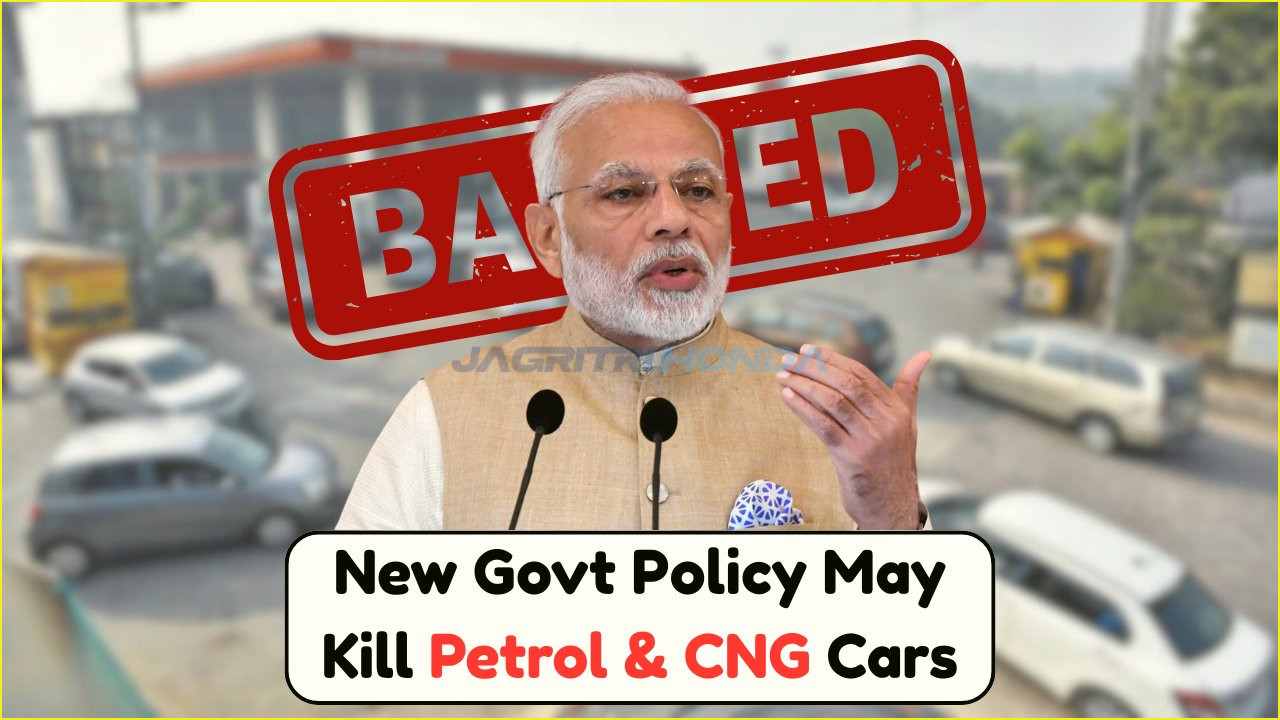
Government’s New Policy Sparks Confusion: Are Petrol and CNG Cars Facing a Ban?

Government’s New Policy Sparks Confusion

Understanding the Future of Petrol and CNG Cars

India’s automotive industry is abuzz with speculation following the government’s latest policy announcement. With whispers of potential bans on petrol and CNG vehicles, car owners and manufacturers alike are seeking clarity.

Policy Highlights:

  • The policy aims to reduce carbon emissions significantly.
  • Focus on promoting electric vehicles (EVs) as the primary mode of transport.
  • Incentives for EV manufacturers and buyers.
  • Potential phasing out of petrol and CNG vehicles by 2030.

Impact on the Automotive Sector

The new policy has prompted mixed reactions across the automotive sector. While some see it as a progressive step towards sustainability, others are concerned about its feasibility and impact on employment.
Industry Reactions:

  • Manufacturers: Concerns about the transition timeline and cost implications.
  • Dealers: Worry about current inventory and future sales.
  • Consumers: Uncertainty regarding vehicle resale value and future purchasing decisions.
  • Environmentalists: Applaud the government’s commitment to reducing pollution.

Comparative Analysis: Petrol, CNG, and Electric Vehicles

Aspect Petrol/CNG Electric
Emissions High Low
Running Cost Moderate Low
Infrastructure Well-established Developing
Government Support Limited High

Challenges in Implementation

Realigning the automotive landscape to favor electric vehicles presents several hurdles.

Challenge Description Potential Solution
Infrastructure Lack of charging stations Government and private investment
Cost High initial purchase price Subsidies and tax benefits
Technology Battery efficiency and range Research and development funding
Public Perception Reluctance to change Awareness campaigns
Resale Market Uncertainty Policy assurances

Government’s Response

The government has addressed some of the industry’s concerns and outlined steps to facilitate the transition.

Key Initiatives:

  • Investment in infrastructure development, including charging stations.
  • Partnerships with private firms to innovate battery technology.
  • Launch of awareness programs to educate the public on EV benefits.

Next Steps:

  • Implementing pilot projects in major cities.
  • Monitoring global trends to adopt best practices.
  • Engaging with stakeholders for feedback and policy adjustments.

What This Means for Consumers

For Indian consumers, the shift towards electric vehicles presents both opportunities and challenges. As the government rolls out its policy, staying informed and adaptable will be crucial.

Consumer Considerations:

  • Assessing long-term cost savings versus initial investment.
  • Exploring government incentives and schemes for EV purchases.
  • Considering the environmental impact of personal transportation choices.
  • Keeping abreast of policy changes and market trends.

Conclusion: Navigating the Road Ahead

Related Posts

Maiya Samman Yojana: ₹2,500 Monthly Support for Women – All You Need to Know In a significant move towards women empowerment, the government has launched the **Maiya Samman Yojana**, a welfare initiative aimed at providing financial assistance of ₹2,500 per month to eligible women. The scheme has created a buzz across the nation for its direct impact on women’s financial independence, especially those from economically weaker sections. This initiative is seen as a major step toward uplifting rural and semi-urban women who often struggle to meet basic needs due to lack of income opportunities. The government’s announcement has come as a relief for homemakers, widows, and women with no stable source of income. The plan is not only to support these women financially but also to recognize their contribution to households and communities. With ₹2,500 being credited every month into the bank accounts of selected beneficiaries, this scheme has the potential to change the lives of millions. This article provides a complete guide to the **Maiya Samman Yojana**, including eligibility criteria, how to apply, important documents, timelines, and contact details for queries. If you or someone in your family qualifies, don’t delay—this scheme could be the financial breakthrough you need. ## What is Maiya Samman Yojana? Maiya Samman Yojana is a women-focused financial aid program designed to ensure monthly income support to underprivileged women in India. * Launched by the state government in coordination with central welfare departments. * Eligible women receive ₹2,500 every month directly into their bank account. * It covers homemakers, widows, and women from low-income families. * Aims to reduce dependency and promote self-reliance among women. * Online and offline application options available. * Government to review and release funds on a quarterly basis. * Helplines set up in every district to support applicants. * Aadhaar-linked DBT (Direct Benefit Transfer) ensures transparency. ## Eligibility Criteria for Maiya Samman Yojana Only women who meet the following criteria are eligible to apply for this benefit scheme: | Eligibility Parameter | Requirement | | ———————– | ———————————- | | Gender | Female only | | Age Limit | 18 to 60 years | | Annual Family Income | Less than ₹2.5 lakh | | Employment Status | Unemployed or informal sector only | | Marital Status | Married / Widow / Single | | Residential Requirement | State domicile mandatory | | Bank Account | Active bank account with Aadhaar | | Other Welfare Schemes | Should not be availing similar aid | ## Required Documents for Application To ensure smooth verification, applicants must submit the following documents while applying. ### List of Mandatory Documents * Aadhaar Card (linked with mobile number) * Ration Card or Income Certificate * Passport-size Photograph * Active Bank Passbook (front page copy) * Residential/Domicile Certificate * Self-Declaration Form * Widow Certificate (if applicable) * Disability Certificate (if applicable) ## How to Apply for Maiya Samman Yojana? Women can apply both online and offline based on their convenience and access. ### Online Application Process * Visit the official state welfare portal or Jan Seva Kendra website. * Register using Aadhaar number and mobile OTP. * Fill out the application form carefully with all personal details. * Upload scanned copies of required documents. * Submit the application and download the acknowledgment slip. ### Offline Application Process * Visit nearest Gram Panchayat, Block Office, or Women Welfare Office. * Collect the application form or fill it on-spot with the help of staff. * Attach all required documents and photos. * Submit the completed form and get a stamped acknowledgment copy. ## State-Wise Rollout and Deadlines The scheme is being rolled out in phases across states depending on budget allocations and demographic readiness. ### Implementation Status Table | State | Rollout Date | Application Deadline | Monthly Beneficiaries | | ————– | ———— | ——————– | ——————— | | Uttar Pradesh | 1 Aug 2025 | 15 Sep 2025 | 12 Lakh+ | | Madhya Pradesh | 10 Aug 2025 | 20 Sep 2025 | 8 Lakh+ | | Rajasthan | 1 Sep 2025 | 30 Sep 2025 | 6 Lakh+ | | Bihar | 5 Aug 2025 | 10 Sep 2025 | 10 Lakh+ | | Chhattisgarh | 15 Aug 2025 | 30 Sep 2025 | 7 Lakh+ | | Odisha | 1 Sep 2025 | 5 Oct 2025 | 5 Lakh+ | | Jharkhand | 10 Sep 2025 | 10 Oct 2025 | 4 Lakh+ | ## How is the ₹2,500 Monthly Amount Distributed? ### Direct Benefit Transfer (DBT) Timeline * Verified applications are processed within 15 working days. * A confirmation SMS is sent to the registered mobile number. * The ₹2,500 amount is transferred between the 5th and 10th of every month. * Women can withdraw funds using ATM, UPI, or through local BC agents. ## Departmental Contact Details for Assistance Women facing issues during registration or money credit can contact the district-wise welfare officials or call the helpline. | Department | Contact Number | Email ID | Office Address | | ———————— | ————— | —————————————————————– | ——————————— | | State Women Welfare Dept | 1800-258-1155 | [[email protected]](mailto:[email protected]) | Civil Secretariat, Capital Region | | District Helpline | 1091 | [[email protected]](mailto:[email protected]) | Respective Zila Parishad Office | | Technical Support | 1800-222-3333 | [[email protected]](mailto:[email protected]) | NIC Building, Sector HQ | | Jan Seva Kendra | Varies by State | Visit Local Kendra Office | Panchayat Bhawan / Block Office | ## What If You Don’t Receive the Payment? Many applicants worry about delays or rejections. Here’s what to do in such cases: ### Possible Reasons for Delay * Bank account not linked with Aadhaar. * Incorrect IFSC code or bank details. * Missing or incorrect documents. * Application not verified by local authority. ### Steps to Resolve the Issue * Visit your local Women Welfare Office with your acknowledgment slip. * Request the status of your application and verification. * Rectify any incorrect details via update forms. * Re-submit the required documents if needed. * You may also file a grievance on the official portal. ## Scheme Impact and Beneficiary Feedback Initial reports show that the scheme has significantly improved the economic conditions of women, especially in rural regions. ### Highlights from the First Quarter * 90% of beneficiaries reported timely payments. * Over 60% used the amount for food, children’s education, or health. * Several self-help groups (SHGs) were formed using this financial base. * Beneficiaries have expressed satisfaction with the easy documentation and application process. ## FAQs **1. Who is eligible for the Maiya Samman Yojana?** Any woman aged 18–60 years, residing in the state, from a low-income background, is eligible. **2. What is the last date to apply?** Each state has different deadlines, but most close applications between 10–30 September 2025. **3. Can I apply if I’m already getting widow pension?** No, overlapping benefit schemes are not allowed under this program. **4. Is it mandatory to have an Aadhaar-linked bank account?** Yes, Aadhaar linkage is necessary for the monthly amount to be credited via DBT. **5. How can I check my application status?** Visit the official state welfare portal and log in with your registered mobile number to track your application.